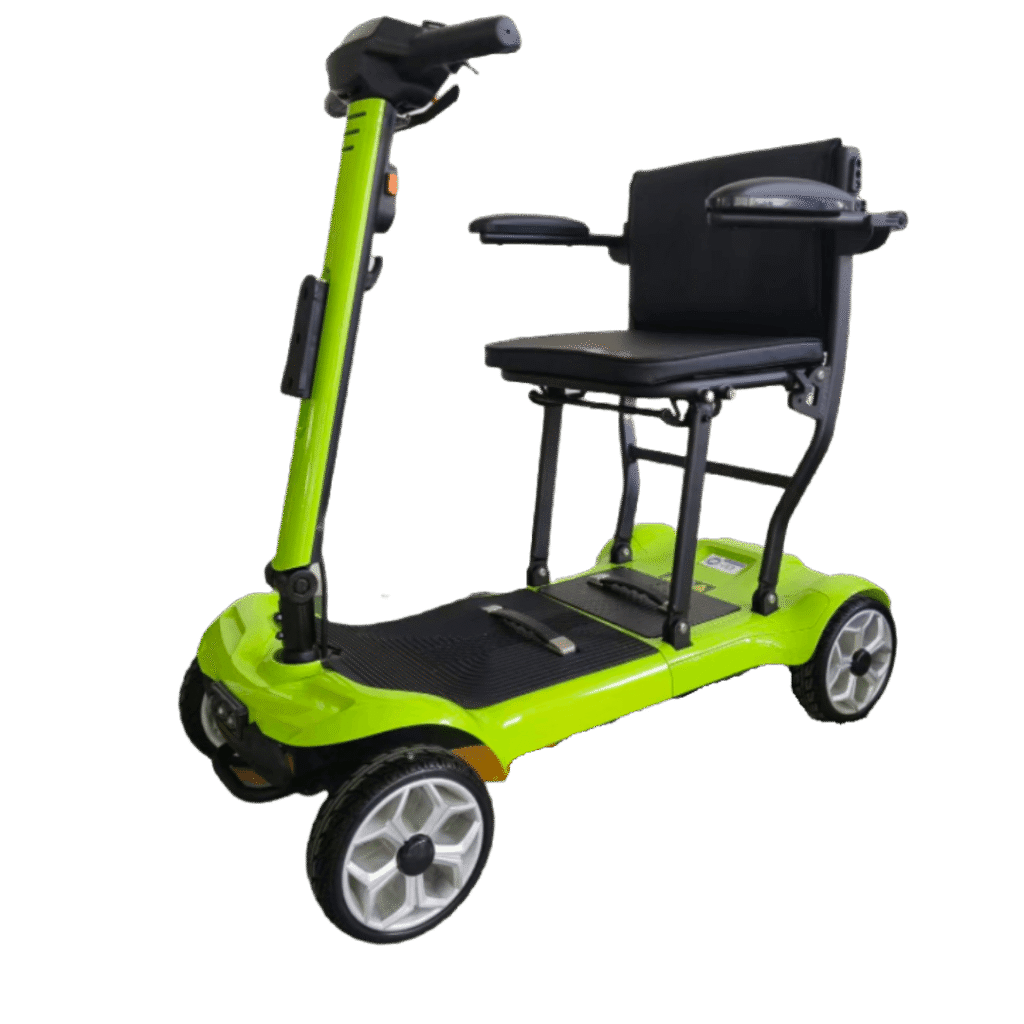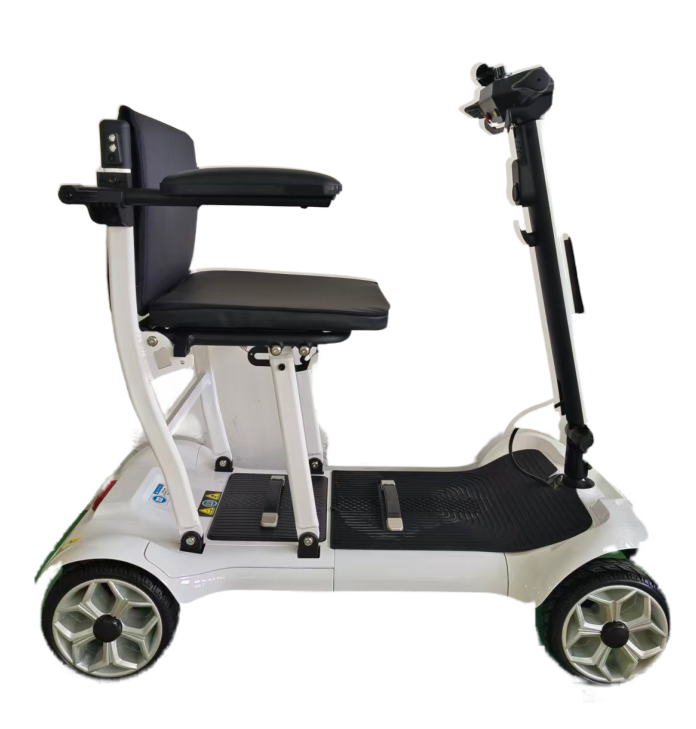
One of the most common frustrations mobility scooter users face isn’t driving it — it’s lifting it.
You may feel confident using your scooter around town, but when it comes to putting it into the car boot, the weight suddenly becomes a serious issue.
Many traditional “boot scooters” weigh 35–45kg in total, and even when dismantled, the heaviest individual section can still weigh over 20kg. For many seniors — or carers loading it regularly — that simply isn’t practical.
If you’re thinking, “I can’t lift my mobility scooter into the car anymore,” here are your realistic options.
Why Are Some Mobility Scooters So Heavy?
Older-style boot scooters were designed to:
• Dismantle into several parts
• Use lead-acid batteries
• Prioritise stability over portability
While stable, they often:
• Require bending and twisting
• Involve multiple heavy sections
• Take time to assemble
For users with reduced strength, arthritis, or back issues, this becomes exhausting.
⸻
Option 1: Choose a True Lightweight Scooter (Under 20kg)
Modern travel scooters have changed the market.
Some lightweight folding models weigh as little as 17kg (without battery) — which makes a dramatic difference when lifting.
To put that into perspective:
• 25kg → Difficult for most seniors
• 20kg → Manageable with effort
• 17kg → Realistically liftable for many people
When comparing weight, always check:
✔ Is the weight quoted including or excluding the battery?
✔ What is the heaviest single lifting component?
✔ Does it fold as one unit or break into pieces?
A compact, one-piece folding design often feels more stable to lift than multiple dismantled sections.
⸻
Option 2: Switch From Dismantling to Folding
Dismantling scooters require:
• Removing the seat
• Disconnecting batteries
• Separating the chassis
A folding scooter:
• Collapses in seconds
• Stays as one unit
• Reduces handling time
For many users, this removes both physical and mental strain.
⸻
Option 3: Use a Lightweight Car Boot Ramp
If lifting isn’t realistic, a simple aluminium ramp can allow you to roll the scooter into the boot instead.
This is particularly helpful if:
• You drive a hatchback
• You have limited upper body strength
• You want to avoid repetitive lifting strain
⸻
Option 4: Consider Vehicle Height
SUVs and crossovers have higher boot lips, which makes lifting harder.
If mobility independence is a long-term goal, vehicle choice matters more than people realise.
A lower hatchback can significantly reduce lifting strain.
⸻
How Much Weight Can the Average Person Safely Lift?
While everyone differs, practical experience shows:
• Many seniors struggle above 22–25kg
• Carers prefer scooters under 20kg
• Under 18kg is ideal for regular independent loading
The difference between 20kg and 17kg may not sound large — but when lifting repeatedly, it’s very noticeable.
⸻
What If You’re Buying for the First Time?
If you are choosing a mobility scooter specifically for transport:
1. Prioritise weight before features
2. Look for compact folded dimensions
3. Ensure battery removal is simple
4. Test-lift if possible
It’s better to sacrifice a little bulk for something you can confidently manage alone.
⸻
The Goal: Maintain Independence
Struggling to lift a scooter often leads to:
• Avoiding outings
• Needing help more often
• Feeling less independent
Choosing a lightweight, foldable model can restore confidence and flexibility — especially for shopping trips, holidays, and day visits.
The key is not just mobility while riding — but mobility when transporting.
If lifting your scooter is becoming a daily frustration, it’s not a failure — it’s simply a weight mismatch.
Modern lightweight mobility scooters are designed specifically to solve this issue.
The right weight can be the difference between dependence and independence.