
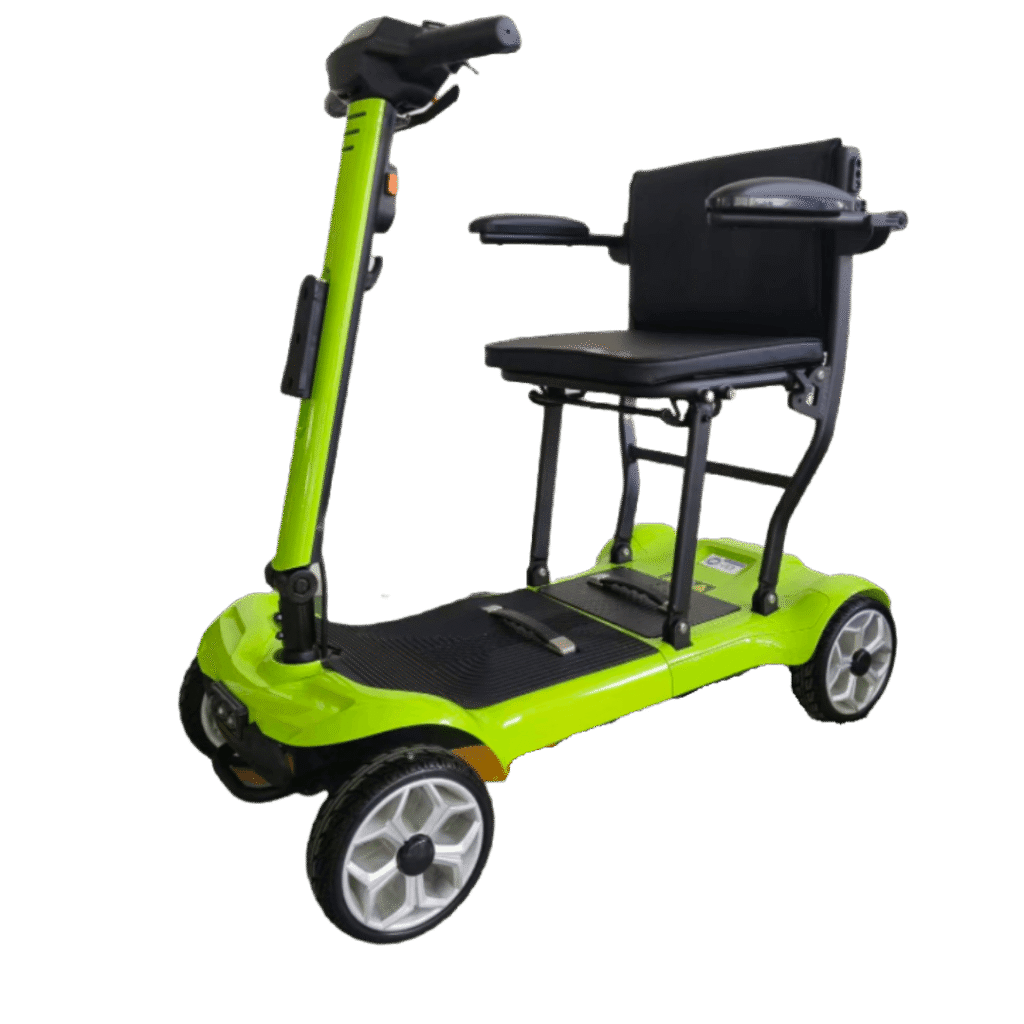
One of the major advantages of a lightweight mobility scooter is that it requires very little maintenance compared to larger road scooters.
However, “low maintenance” does not mean “no maintenance.”
With simple regular care, you can:
- Extend battery life
- Maintain smooth performance
- Protect your investment
- Avoid unexpected breakdowns
Here’s a practical maintenance guide for lightweight folding and portable mobility scooters.
1️⃣ Battery Care – The Most Important Factor
Your battery is the heart of your scooter.
Most lightweight models use either:
- Lithium batteries
- Sealed lead-acid batteries
Best Charging Practices
✔ Charge after each day of use
✔ Avoid fully draining the battery regularly
✔ Use only the manufacturer-approved charger
✔ Store and charge in a dry environment
Avoid These Mistakes
✘ Leaving the battery flat for weeks
✘ Storing in damp garages
✘ Using third-party incompatible chargers
For lithium batteries especially, consistent top-up charging helps preserve long-term performance.
2️⃣ Keep It Clean (But Not Soaked)
Mobility scooters are used outdoors — so dirt is unavoidable.
Regularly wipe down:
- Tiller and controls
- Folding joints
- Wheel hubs
- Footplate
Use a slightly damp cloth. Avoid:
✘ Pressure washers
✘ Direct hose spraying
✘ Excess water near electronics
Water intrusion is one of the most common causes of electrical issues.
3️⃣ Tyre & Wheel Maintenance
Many modern lightweight scooters use solid PU tyres, which means:
✔ No punctures
✔ No inflation checks
✔ Minimal maintenance
However, you should still:
- Check for embedded debris
- Inspect for uneven wear
- Ensure wheels rotate freely
If you frequently travel over gravel or uneven pavements, periodic inspection is wise.
4️⃣ Folding Mechanism Checks
Because folding scooters are handled regularly, it’s important to:
- Inspect hinges
- Check locking mechanisms
- Ensure smooth folding action
If you notice stiffness or resistance:
- Wipe clean
- Lightly lubricate moving joints (if manufacturer-approved)
Avoid forcing the mechanism.
5️⃣ Braking & Controls
Lightweight scooters typically use electronic or electromagnetic braking systems.
Regularly check:
- Throttle response
- Smooth stopping
- No unusual noises
If braking feels inconsistent, arrange a professional inspection.
6️⃣ Storage Advice
Storage significantly affects lifespan.
Ideal Storage Conditions
✔ Indoors
✔ Dry
✔ Away from extreme cold
✔ Away from prolonged heat
Cold temperatures can temporarily reduce battery performance.
If storing long term:
- Charge battery every 4–6 weeks
- Avoid leaving it fully discharged
7️⃣ Annual Servicing
Even lightweight scooters benefit from:
- Annual safety inspection
- Electrical system check
- Brake calibration
- Structural integrity review
This is especially important if used daily.
Common Signs Your Scooter Needs Attention
- Reduced range
- Slower acceleration
- Stiff folding
- Clicking noises
- Battery not holding charge
Addressing small issues early prevents larger repair costs later.
A lightweight mobility scooter is designed for convenience — but regular care ensures reliability.
A simple routine of:
- Proper charging
- Light cleaning
- Periodic checks
Can add years to your scooter’s lifespan and keep every journey smooth and stress-free.