
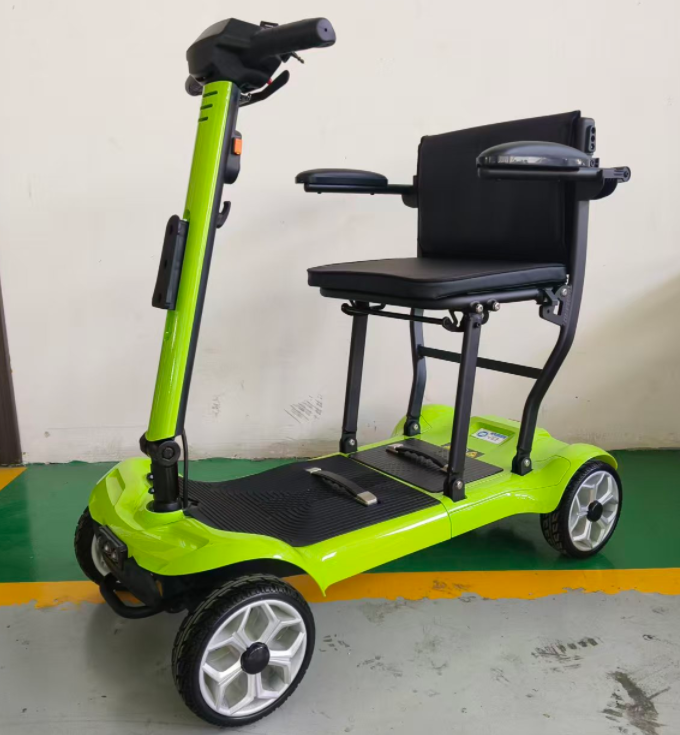
When choosing a mobility scooter, weight is one of the most important factors — especially if you plan to lift it into a car boot, store it at home, or travel frequently.
But how heavy should a lightweight mobility scooter actually be?
In this guide, we’ll break down:
- The average weight of different scooter types
- What counts as “lightweight”
- Why weight matters more than most people realise
- What to check before buying
Average Mobility Scooter Weight in the UK
Mobility scooters vary dramatically in weight depending on their design.
Here’s a general breakdown:
| Type of Scooter | Average Weight | Notes |
|---|---|---|
| Heavy-duty road scooter | 80–120kg | Not portable |
| Mid-size pavement scooter | 45–70kg | Limited portability |
| Traditional boot scooter | 35–45kg | Must be dismantled |
| Lightweight folding scooter | 17–22kg | Folds, lithium battery |
If you’re specifically looking for a lightweight mobility scooter, you should be aiming for under 22kg, ideally closer to 17–19kg.
What Is Considered a Lightweight Mobility Scooter?
In today’s market, a scooter is considered lightweight if it:
- Weighs under 25kg fully assembled
- Uses a lithium battery
- Has an aluminium frame
- Folds rather than dismantles
The newest generation of ultra lightweight scooters now weigh as little as 17kg without the battery, and around 19–20kg including battery.
That’s less than half the weight of many older boot scooters.
Why Mobility Scooter Weight Matters
Many buyers underestimate how important scooter weight is until after purchase.
Here’s why it’s critical:
1️⃣ Lifting Into a Car Boot
A 40kg scooter often requires dismantling into multiple parts.
A 17–20kg folding scooter can usually be lifted in one piece.
For elderly users — or spouses helping lift — this makes a significant difference.
2️⃣ Storage at Home
Heavier scooters:
- Take up more space
- Are harder to reposition
- Often require garage storage
Lightweight scooters:
- Fold compactly
- Fit in hallways or cupboards
- Can be lifted up small steps
3️⃣ Travel & Holidays
Airports, cruises and train journeys are far easier with a scooter under 20kg.
Lithium batteries are also far more travel-friendly than older lead acid models.
Is Lighter Always Better?
Not necessarily.
A very lightweight scooter is ideal for:
- Pavement use
- Shopping trips
- Urban environments
- Users under 120kg
However, heavier scooters may be better if you need:
- Suspension systems
- Long all-day outdoor use
- Rough terrain capability
- Higher ground clearance
For most everyday UK users, a lightweight folding scooter offers the best balance of portability and performance.
What About Battery Weight?
Battery type significantly affects total scooter weight.
Lead Acid Batteries
- Heavier
- Shorter lifespan
- Slower charging
- Typically reduce portability
Lithium Batteries
- Much lighter
- Longer range
- Faster charging
- Removable for easier lifting
Modern lightweight scooters use 24V 10Ah lithium batteries, which contribute to keeping total weight under 20kg.
Weight Without Battery vs With Battery
When comparing scooters, always check:
- Weight without battery
- Weight including battery
Some retailers advertise the lower figure only.
A truly lightweight model should remain under 20kg even when fully assembled.
Ideal Weight for a Lightweight Mobility Scooter
For most users in the UK, the sweet spot is:
- 17–19kg without battery
- Under 22kg fully assembled
This allows:
✔ Easy lifting
✔ Compact storage
✔ Strong 120kg weight capacity
✔ Practical 15–20km range
Anything over 30kg moves into traditional “boot scooter” territory.
Final Advice Before Buying
Before purchasing, ask yourself:
- Can I comfortably lift 20kg?
- Will someone else be lifting it for me?
- Do I need suspension or just portability?
- Do I want folding or dismantling?
If independence and ease of transport are your priority, choosing a lightweight folding mobility scooter under 20kg is usually the best decision.